Opening
Taking one assembly standpoint, siliceous material and clarifying agent signify selected vital factor in diverse processes across one expansive range of areas. Observations reveal that stable performance necessitates recognizing the distinctive aspects of the ingredient – its particle size, porosity, and separation speed. Fine-tuning these criteria is fundamental to gaining desired clarity and effectiveness in the purification system. Over and above that, managing airborne particles is a considerable issue for employee security and regulatory requirements.
Seeking Appropriate Diatomite Provider
Securing a reputable diatomite supplier for screening procedures can significantly influence product purity and manufacturing productivity. Scrutinize specifications such as item grade, particle spread, supply status, charges, and buyer service when opting. Never neglect design skills and transport assets – a reliable merchant offers beyond simple materials. Finally, developing a stable bond with a reputable diatomite aid company will bolster your sustained victory.
Additional Utilizations of Diatomite Beyond Filtering
Whereas normally cited for its effect in screening processes, diatomite contains remarkably far-reaching alternate functions. Outside aquatic arenas, this earthy compound supports horticulture through gentle pest management and nutrient supply. Further, its distinct absorbent configuration supports livestock food by aiding digestive functions. Buyers notice this substance within cosmetic formulations serving as a mild polisher or drying agent. Fundamentally, the breadth of DE continues to astonish practiced analysts.
- Cultivation
- Livestock Nutrition
- Skin Care
Quality Control in Diatomite Filter Aid Production
Delivering unvarying quality in diatomite clarifying material production demands exacting control practices. These inspections commence with the unprocessed compound, encompassing analysis of particle spread, openness, and wetness degree. During pulverizing and calcination tasks, sustained monitoring of whiteness, apparent density, and fluidity is pivotal. Completed batches undergo elaborate assessment based on firm procedures, usually featuring particle size analysis via laser light diffraction and area calculation.
- Confirmation of cleanness is equally crucial
- Periodic reviews of machinery are conducted
- Trackability of resources is upheld
Worldwide Siliceous Earth Market: Developments and Producers
The universal diatomaceous earth trade currently undergoes substantial growth powered by escalating demand across assorted sectors. Chief trends encompass ascending deployment in clarifying methods, farm pest prevention, and as desiccating products. Diverse foremost manufacturers consistently channel funds into innovation to elevate product features and widen markets. Established firms such as EP Minerals, Imerys, Grant Prideaux play a crucial function guiding the evolution of diatomaceous earth industry.
Opting for Diatomite Filtration Aid: Essential Criteria
During picking a kieselguhr clarifying substance for your operation, key considerations should be assessed. The particle size distribution is paramount, directly impacting filtration rate and clarity of the filtered liquid. Examine the separation machinery's strain capacity; larger types perform in low forces, while delicate models tolerate greater pressures. Also, the celite's purity and density shape handling traits. Finally, assess the cost and availability of different grades to optimize your overall filtration efficiency.
- Grain Spread
- Machinery Force Capability
- Cleanness and Compactness
- Expense and Supply Condition
Eco-Conscious Sourcing of Siliceous Earth
Guaranteeing continued viability of diatomite harvesting demands a focused dedication to responsible procurement methods. Conventionally, diatomaceous material mining triggered nature concerns encompassing biodiversity disruption and resource draining. Accordingly, pioneering sellers apply techniques mitigating these outcomes. This involves restoring terrain, optimizing water use, and promoting regional welfare. Moreover, responsible acquisition generally employs credentials from independent authorities, proving observance of tough environmental standards.- Attention to site rehabilitation
- Decreasing liquid usage
- Enhancing local improvement
Filtration Aid Substance: Advancing Filtering Procedures
Filtration aid compound works as a clarifying medium, substantially elevating filtering performance for wide-scale applications. Processed diatomite develops a permeable film over filter media, enabling separation of minute solids diatomaceous earth manufacturer from fluids. Consequently, brightness strengthens and the full operation benefits.Grasping Diatomaceous Earth and Fabrication Methods
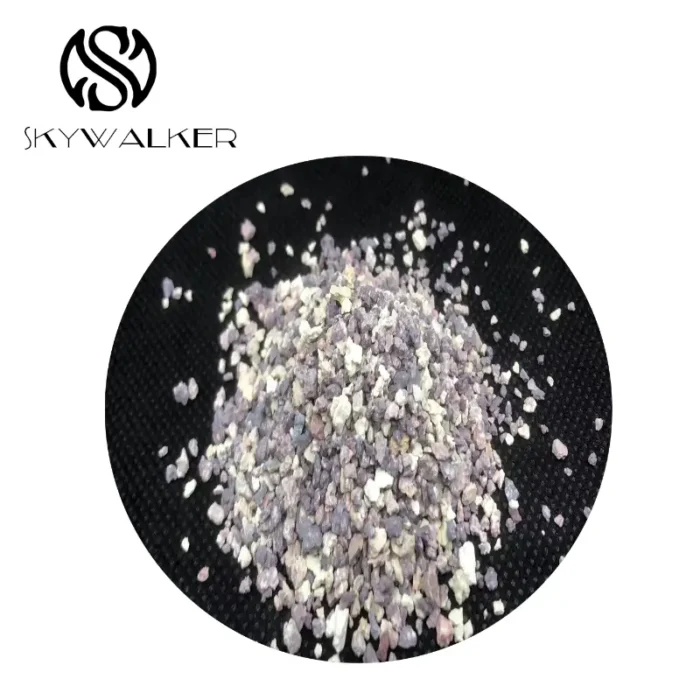
Diatomite, also known as earth powder, is a sedimentary rock composed of the skeletons of microscopic algae. Its unique structure provides exceptional absorbent qualities|Its distinctive composition delivers remarkable filtering properties|Its specialized makeup grants outstanding abrasive features|Its characteristic formation offers extraordinary absorbency traits|Its individual configuration yields superior filtering abilities|Its peculiar composition presents exceptional abrasive qualities|Its exclusive structure affords outstanding absorbent features|Its special makeup supplies remarkable filtering properties}. The manufacturing of diatomite begins with mining from open-pit mines|The production of siliceous earth starts with extraction from surface quarries|The processing of diatomaceous material initiates with excavation from open deposits|The fabrication of silica sediment originates with mining at surface pits|The creation of diatomite commences with quarrying from open-pit sites|The synthesis of siliceous material starts with surface mining|The making of diatomaceous earth begins with excavation of open deposits|The formation of silica earth starts with quarrying surface mines}. The raw material is then crushed and washed to remove impurities|The unprocessed substance is subsequently broken and cleaned to eliminate contaminants|The crude product undergoes grinding and rinsing to discard debris|The natural material is pulverized and cleaned to reject impurities|The unrefined matter is crushed and washed to clear contaminants|The original compound is ground and cleansed to eradicate debris|The raw component is broken down and rinsed to remove impurities|The crude sample is pulverized and cleaned to eliminate contaminants}. Following washing, material undergoes drying to reduce moisture content|After cleaning, substance experiences evaporation to lessen dampness level|Post rinsing, product endures heat treatment to decrease water amount|Following cleansing, compound passes drying phase to cut down moisture presence|After washing, material goes through evaporation process to lower dampness content|Post cleaning, matter undergoes heating phase to reduce water level|Following rinsing, product experiences drying step to minimize moisture amount|After purification, substance passes heat treatment to decrease water presence}. Finally, it is milled into various sizes to meet application needs|Ultimately, it is ground into different grades to satisfy diverse demands|Concluding, it is pulverized into specific ranges to fulfill usage requirements|Eventually, it is milled into assorted distributions to accommodate different uses|In the end, it is ground into multiple sizes to adapt to application specifications|Finally, it is pulverized into varied grades to meet demand characteristics|Ultimately, it is milled into distinct ranges to fit use requirements|Eventually, it is ground into assorted distributions to conform with application needs}.